
Rooms & Storage / GUIDE 09
Apartment Interior Design Abu Dhabi: Calm Master Bedrooms
Create a calm master bedroom in an Abu Dhabi apartment by coordinating the bed, storage, window treatments and separate lighting controls.
The essential idea
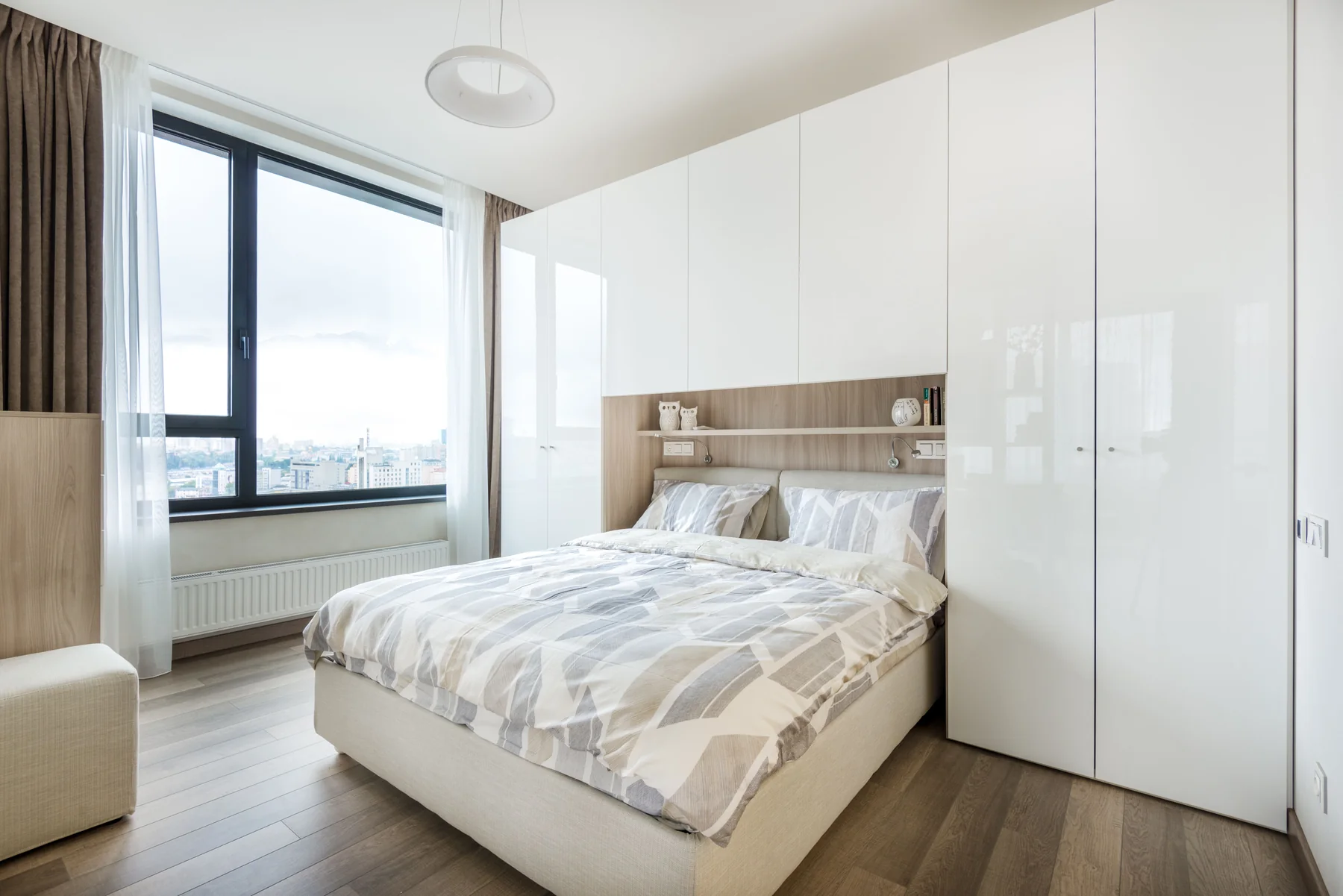
A calm master bedroom starts with a comfortable bed position and an uncomplicated route around it. Coordinate storage, light control and bedside essentials before selecting decorative finishes. The room should support different waking and sleeping routines without requiring the whole space to be active at once.
A restful-looking bedroom is not always a convenient bedroom. Deep bedside tables may block wardrobe doors, a striking pendant may glare from the pillow, and decorative cushions may have nowhere to go. Thoughtful Apartment Interior Design Abu Dhabi considers the room from the resident's perspective at the beginning and end of the day. Visual calm should follow practical decisions, rather than conceal unresolved ones.
Establish the bed position
Begin with the actual mattress and bed-frame dimensions, including the headboard and any projecting base. Check access on the sides used by the household and the route to the bathroom or wardrobe. Do not assume the largest bed that fits will produce the most comfortable room.
Look at the view from the pillow and from the doorway. The bed does not need to sit in the geometric centre if another position gives better circulation, storage access or privacy.
Make bedside essentials easy to reach
List what each resident uses at night: a glass of water, a book, glasses, a phone or another personal item. Provide an appropriate surface and accessible controls. The two sides of the bed can respond differently while still sharing a coherent design.
Review cable routes and outlet locations before ordering fixed joinery. Avoid creating a beautiful bedside arrangement that relies on leads stretched across the floor or sockets hidden behind heavy furniture.
Separate lighting tasks
General room lighting, reading and getting up quietly are different activities. Plan them separately so one person can read without illuminating the entire bedroom. Check the position of the reading light from the actual reclining posture.
A low-level light may help with movement at night, but its suitability depends on the room and the resident. Test brightness and switching rather than relying on a product image. Controls should be understandable to someone who is tired.
Coordinate wardrobe and curtain access
Open wardrobe doors and drawers on the plan before approving the bed position. Make sure a person can stand comfortably while selecting clothes. The bedroom should still work when a laundry basket or suitcase is temporarily present.
Allow space for curtains to gather when open and confirm that furniture does not obstruct their movement. Window treatments should be chosen for the light and privacy required, with their fixing and operation considered as part of the room.
Choose a restrained material palette
Start with the surfaces that occupy the most visual space: walls, flooring, headboard and curtains. Compare them together in the room's light. A small difference between two pale tones can be more noticeable than expected.
Add texture deliberately rather than adding more colours to make the room interesting. Washable bedding, a comfortable rug where appropriate and a limited number of decorative objects can provide warmth without making maintenance difficult.
Prepare for the morning as well as the evening
Give worn-but-reusable clothing, laundry and bedding a destination. If a chair is likely to become a permanent pile of clothes, a more direct storage solution may work better. Keep dressing activities close to the wardrobe when space allows.
Review the room through two scenarios: one person getting ready while another rests, and both people preparing to leave. The most successful bedroom accommodates these ordinary differences quietly, with little rearrangement and no competition for basic access.
Common questions
Does a calm bedroom need to be completely neutral?
No. A restrained palette can include a stronger colour if the household enjoys it. Concentrate on the overall balance, material relationships and lighting. Calmness also depends on useful storage and comfortable circulation, not just on pale walls.
Should bedside tables always match?
They do not have to. Different widths or storage arrangements may better serve the people using them. Keep a relationship through height, finish or proportion, and confirm that both sides provide convenient access to lighting and daily essentials.