
Light & Materials / GUIDE 13
Apartment Interior Design Abu Dhabi: Daylight and Window Treatments
Choose window treatments for an Abu Dhabi apartment by reviewing daylight, privacy, screen reflections and the way each room is used.
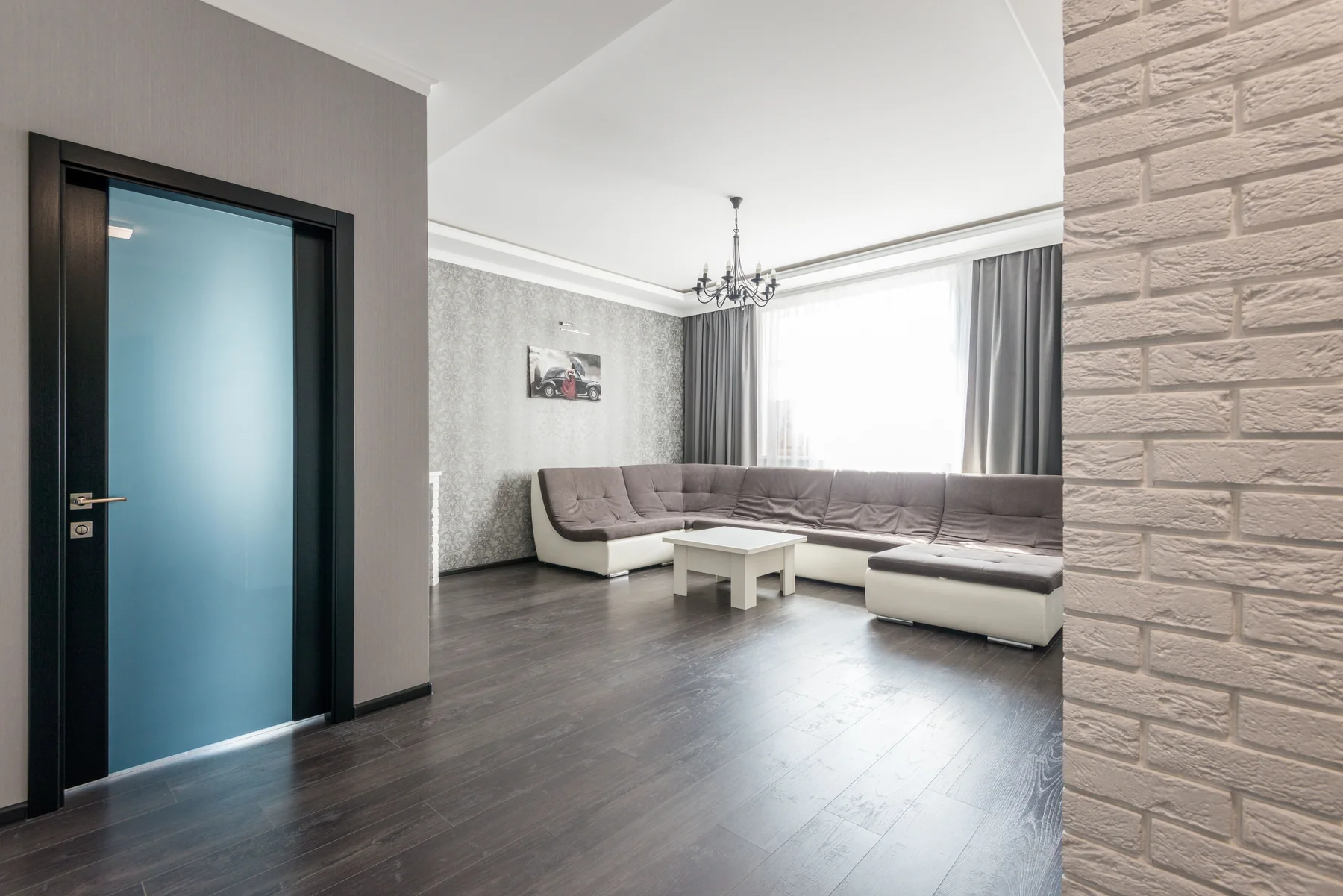
The essential idea
Window treatments should respond to the actual window, room orientation and daily routine. Assess daylight, privacy and unwanted reflections separately, then choose suitable layers and controls. Check curtain stacking, fixing positions and the relationship to air-conditioning outlets before ordering.
A large window can be an apartment's strongest feature, yet the same opening may create difficult reflections, exposed evening views or an uncomfortable seat at certain times. Selecting curtains from a small fabric sample does not resolve those differences. For an Abu Dhabi apartment, the useful starting point is to observe the room and decide what the window treatment needs to do.
Observe the room through the day
Visit at different times where possible and note how the light reaches the furniture. Record where direct sun appears, where reflections occur and which parts of the room remain dim. The view and the direction of light are separate considerations.
Repeat the assessment with the lights on after dark. A treatment that provides adequate daytime privacy may behave differently when the interior is illuminated. Ask the supplier to explain the performance of the actual fabric or system.
Define the purpose of each layer
A light-filtering layer, a more opaque curtain and a blind do not perform identical roles. Decide whether the room needs softened daylight, visual privacy, substantial darkening or a combination. Avoid specifying several layers simply because a reference photograph includes them.
| Requirement | Question to resolve |
|---|---|
| Daytime privacy | How visible is the interior from relevant viewpoints? |
| Screen comfort | Where do reflections fall during use? |
| Bedroom darkening | How much light enters around the edges? |
| View retention | Can the treatment open sufficiently? |
| Easy operation | Can every resident use the controls? |
Coordinate the furniture position
Sometimes the best response to glare is a modest change in furniture orientation. A desk placed directly against a bright window may be uncomfortable even with a new blind. Test the screen position and seating before committing to the treatment.
Keep furniture clear of the operating path. A chair that traps a curtain or a cabinet that blocks a blind control will make an otherwise suitable system frustrating to use.
Measure the complete installation
Consider the space above and beside the window, the curtain's open stack and the relationship to the floor. Confirm which surface will support the track or fixing. Do not rely solely on the visible opening dimensions.
Check access to windows and any nearby equipment. The design should not obstruct air-conditioning grilles, service panels or required window operation. Fixed changes should be coordinated with the project team and relevant building requirements.
Compare real samples in the room
View fabrics against the window and beside the chosen wall colour. A material can look different when light passes through it than when it lies on a sample table. Review its texture, opacity and care requirements together.
Where practical, ask for a larger sample or a demonstration of the proposed system. For a bedroom, discuss edge light and overlap rather than assuming a fabric labelled blackout makes the entire installation completely dark.
Choose controls that will be used
Manual operation may be entirely suitable where access is easy. Motorised controls can help in some layouts, but require power, coordination, servicing and a clear fallback arrangement. Select them for a practical reason.
Consider children and other household needs when selecting cords and operating hardware. Follow the product's safety and installation guidance. A successful window treatment is comfortable to use every day, not just attractive while fully open.
Common questions
Are sheer curtains enough for apartment privacy?
That depends on the fabric, lighting and viewpoints. Daytime performance does not necessarily describe what happens at night with interior lights on. Assess the actual room and consider a second layer where greater privacy is required.
Should curtains cover the entire wall?
They can create a continuous appearance, but the decision should follow the room's proportions, available stacking space and maintenance needs. Keep access to windows and equipment clear. A carefully measured treatment may work better than a full-wall installation.