
Rooms & Storage / GUIDE 11
Apartment Interior Design Abu Dhabi: Children's Bedrooms That Grow
Plan a child's bedroom in an Abu Dhabi apartment with adaptable storage, a usable study area and furniture suited to changing routines.
The essential idea
A child's bedroom can adapt over time when its permanent elements remain simple and its storage can be adjusted. Plan sleeping, play and study as related activities, choose age-appropriate furniture, and review safety through the actual products and installation. Let personality come from details that are easy to change.
Children's rooms often change faster than other parts of an apartment. Toys give way to books, drawing becomes homework, and the amount of clothing grows. A room designed around one short-lived theme may need an extensive update surprisingly soon. For an Abu Dhabi family apartment, a more durable approach is to build a useful framework that can accommodate those changes.
Plan for current routines first
Begin with the child's present age, habits and preferences. A young child may need open floor space and low storage more than a large desk. An older child may value a quieter study position and somewhere to keep projects undisturbed.
Think about the next likely stage, but do not make the current room uncomfortable in preparation for a distant future. Adjustable storage and movable furniture often provide a better balance than oversized permanent pieces.
Keep sleeping and play space understandable
Position the bed so access is straightforward and the room's main route remains clear. Check what happens when drawers, toy boxes or wardrobe doors are open. A room should not rely on every item being perfectly put away to remain usable.
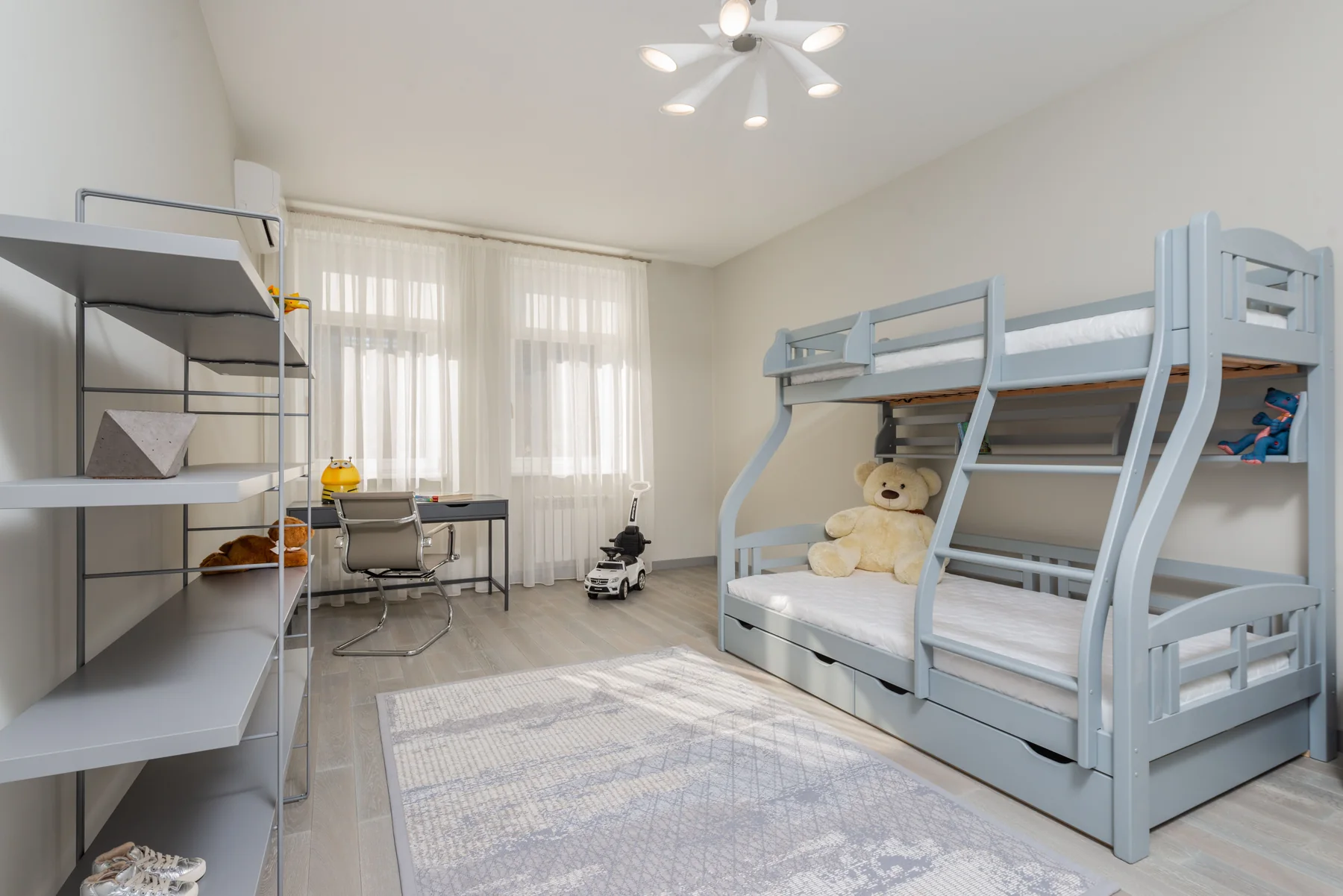
Choose furniture appropriate to the child's age and follow its manufacturer instructions. Do not infer the safety of a bunk, raised bed or climbing feature from an attractive photograph. Any such choice needs careful product and installation review.
Make storage visible and achievable
Children are more likely to use storage they can understand and reach. Give frequently used items clear destinations, with categories simple enough to maintain. A few well-sized containers may be more practical than many tiny compartments.
Reserve less accessible storage for items managed by adults. Review the stability and required anchoring of furniture, and arrange the room so that desirable objects do not encourage climbing onto unsuitable units.
Give study a usable place
A study area needs more than a decorative chair and a narrow shelf. Check the fit of the desk and chair for the child, the space for books or a device, and the location of power where needed. The arrangement should be adjustable as the user grows.
Position the desk with attention to daylight and reflections. Provide task lighting for use after dark and a nearby place to store school materials. A clear work surface is easier to maintain when supplies have a defined home.
Keep the permanent palette flexible
Choose durable base finishes that can work with changing interests. Colour can come through bedding, artwork and selected accessories. This allows the room to evolve without replacing sound cabinetry or redecorating every surface.
Let the child participate in a manageable number of decisions. Choosing between two suitable colours or storage options can give a sense of ownership while keeping the overall design coherent and practical.
Review the room with an adult's eye
Check furniture stability, reachable cords, sharp projections and access to windows. Use appropriate products and installation methods, and obtain specialist advice where necessary. Decorative window treatments should be selected with child safety in mind.
Finish with a practical trial: getting dressed, taking out toys, setting up homework and putting everything away. The room should help these routines become easier. Its success is measured over ordinary days, not by how closely it resembles a styled photograph.
Common questions
How can a child's room avoid feeling too young later?
Keep the main furniture and permanent finishes adaptable, then express the child's current interests through replaceable items. Adjustable shelves and a flexible study position can accommodate change more easily than elaborate built-in themes.
Is a bunk bed a good way to save space?
It may be suitable in some rooms, but suitability depends on the child's age, the product, ceiling conditions and installation. Follow the manufacturer's requirements and assess access and supervision carefully. Floor space alone should not decide the purchase.