
Space & Planning / GUIDE 02
Apartment Interior Design Abu Dhabi: Studio Apartments with Separate Living Zones
Create clear living, sleeping and working zones in an Abu Dhabi studio apartment using furniture, light and carefully considered screening.
The essential idea
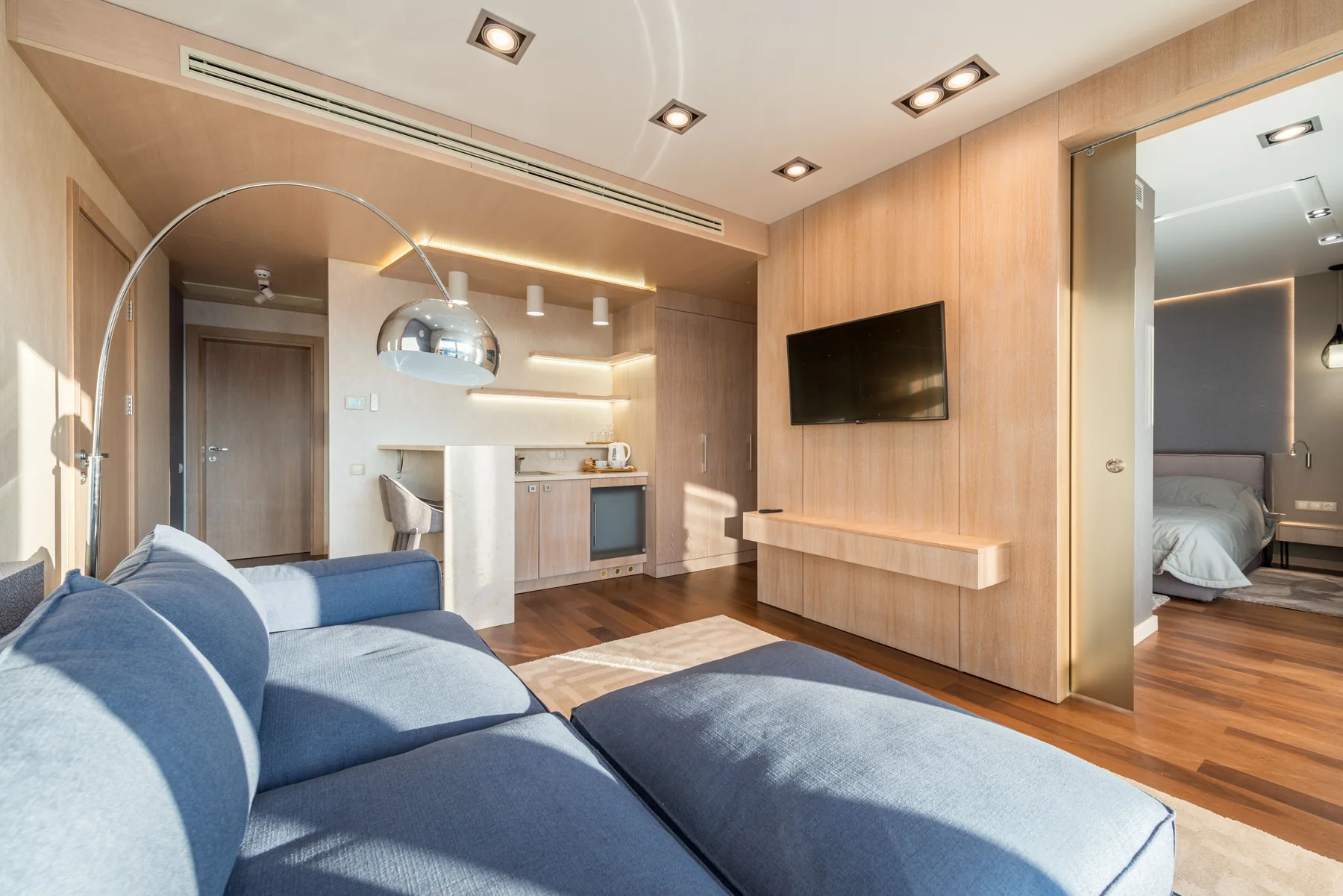
A studio apartment does not need a wall around every activity. Establish the sleeping zone first, keep a clear route through the room, and use furniture, lighting or a suitable screen to distinguish other areas. Each boundary should improve privacy without unnecessarily reducing light or usable space.
A studio asks one room to support several different states of life. Breakfast, work, a visit from a friend and sleep may all happen within a few steps. Successful Apartment Interior Design Abu Dhabi starts by giving those activities a recognisable place. The aim is not to disguise the studio as a larger apartment, but to make its transitions feel deliberate and comfortable.
Start with the sleeping position
Choose the bed location before filling the room with smaller furniture. Consider the view from the entrance, access to both sides where needed, proximity to windows and the route to the bathroom. Avoid treating the bed as the piece that fits wherever space remains.
The sleeping zone should have a reachable light, a place for personal items and convenient charging. These details help it function as a bedroom even when it remains part of a larger room.
Separate sightlines from floor area
Privacy often depends on what can be seen from a doorway or seat, not simply on how many partitions exist. A carefully placed bookcase or screen may interrupt a direct view of the bed without dividing the entire apartment.
Check both sides of a proposed divider. A freestanding unit needs stability, safe installation where required and usable access. Do not place it where it blocks a return-air grille, sprinkler, detector or essential route.
Compare ways to define a zone
A change in furniture orientation can establish a boundary with no additional construction. Curtains and screens offer other options, but each has different maintenance, privacy and installation implications. Discuss fixed partitions with the project team before assuming they are straightforward.
| Zoning method | Useful contribution | Limitation to consider |
|---|---|---|
| Sofa orientation | Defines a living area | Offers limited visual privacy |
| Rug and lighting | Makes an activity recognisable | Does not separate sound |
| Open shelving | Adds storage and a partial boundary | Requires a tidy display |
| Curtain or screen | Softens a direct sightline | Needs space, fixing and care |
Keep daylight useful across the room
Study where daylight reaches before choosing a tall divider. A partition that makes the bed private may leave the work or dining corner unnecessarily dark. Consider a lower element or a position parallel to the light path.
Review the apartment at different times if access allows. The brightest location is not automatically the best desk position; reflections on a screen may make it uncomfortable. Window treatments and task lighting should support the zoning plan together.
Plan the change from day to evening
A studio can feel more settled when work items disappear after use. Provide a drawer for the laptop, a place for paperwork and a way to keep charging leads organised. A small table can serve different activities if its reset is quick.
Separate lighting controls help change the room's mood without rearranging it. A reading light by the bed and a lamp near the sofa let one area remain active while the other feels quieter.
Leave room for the ordinary mess
Storage should accommodate the objects that regularly cross between zones: shopping bags, exercise equipment, guest bedding and laundry. If these have no destination, the apartment will lose its boundaries quickly.
Test the final plan with the bed made, a chair pulled out and the wardrobe open. Ask whether a visitor can sit comfortably while daily belongings remain accessible. A successful studio layout continues to work when it is lived in, rather than only when everything has been put away.
Common questions
Is a glass partition always the best studio divider?
No. Glass can preserve a visual connection, but it may not provide the privacy, acoustic separation or flexibility you need. Review installation, cleaning, curtains and any building requirements before choosing it. Sometimes furniture placement is the more practical solution.
Where should a home office go in a studio?
Choose a position with useful light, manageable screen reflections and enough space for the chair. It should not block the apartment's main route. Provide a simple way to store work equipment so the area can return to domestic use at the end of the day.